
The old rules of YouTube SEO are officially dead. If you are still trying to rank by stuffing keywords in your description and repeating tags, your channel is going to get left behind.In 2026, the YouTube algorithm is incredibly smart. It is powered by advanced AI and deep neural networks. Instead of just reading text, it now deeply understands:
1. Understand the 2026 YouTube Algorithm Shift
Before diving into optimization, you must understand what the algorithm actually wants. YouTube’s primary goal has not changed: they want to keep viewers on the platform for as long as possible so they can show them ads. However, how they measure this has evolved.In 2026, the algorithm prioritizes three core metrics over everything else
- Satisfied Watch Time (Retention): It’s no longer just about how long someone watches, but how satisfied they are. YouTube tracks things like post-watch surveys, shares, and whether the viewer stopped searching for that topic after watching your video.
- AIGC Content Filtering: With the explosion of AI-generated videos, YouTube heavily favors videos that showcase Real Human Experience (E-E-A-T). Unique voices, real faces, and hands-on demonstrations rank much higher than robotic, faceless AI channels.
- Multi-Format Synergy: Channels that successfully connect their YouTube Shorts, Live Streams, and Long-form videos together get an algorithmic sitewide boost.
2. Advanced Keyword Research: Finding “Intent-Based” Topics
Gone are the days when you could just look at high search volume numbers on a tool and make a video. In 2026, you need to find what we call “Intent-Based Low Competition Keywords.”
How to Find Winning Keywords in 2026:
- Analyze Search Intent: When someone types “Video Editing,” do they want a tutorial, a software review, or a cinematic montage? Look at the top 3 ranking videos for your target keyword to understand exactly what format the audience wants.
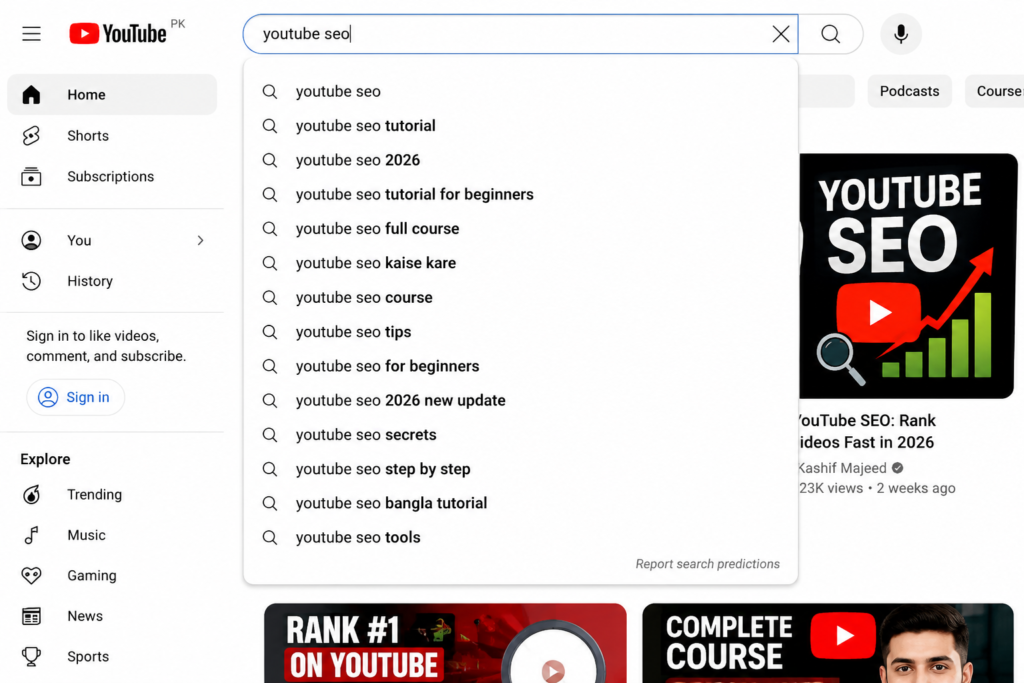
- Use the YouTube Search Bar (AutoComplete): Type your main topic into the search bar followed by “in 2026” or “for beginners.” The suggestions that drop down are goldmines because real people are actively searching for them right now.
- Target “Zero Search Volume” Long-Tail Keywords: Don’t be afraid of highly specific, long phrases (e.g., “How to color grade iPhone 15 log footage in CapCut mobile”). Traditional tools might say it has zero searches, but these targeted topics build immediate authority and loyal viewers.
3. The 3-Step “On-Page” Video Optimization
Once you have your keyword and have filmed your video, it is time to optimize it so the AI crawler can easily read and understand your content.
Step 1: The Click-Trigger Title
Your title needs to balance keyword optimization with human psychology.
- The Blueprint: Put your main keyword at the very beginning, and add an emotional trigger or curiosity loop at the end.
- Example 2026 Format: “YouTube SEO Guide 2026: The 1 Hidden Setting That Doubles Views.”
Step 2: The Smart Context Description
Stop pasting 50 keywords into your description. YouTube penalizes keyword stuffing. Instead, treat your description like a short, highly professional blog post.
Step 3: Video File and Tag Optimization
Before you click upload, rename your actual raw video file (e.g., final_render_v2.mp4) to your target keyword (e.g., youtube-seo-guide-2026.mp4). While tags have low importance now, use them strategically to include common misspellings or broader category terms.
4. Designing Dynamic CTR Thumbnails
Click-Through Rate (CTR) is half the battle won. If your video ranks #1 but nobody clicks on it, YouTube will quickly drop it down to page 5.
In 2026, visual trends have moved away from overly cluttered, bright red arrows and shocked-face expressions. Audiences are experiencing “thumbnail fatigue” from those old designs.
Checklist for a Winning 2026 Thumbnail:
- Three-Element Rule: Keep your thumbnail limited to a maximum of 3 visual elements (e.g., One clear face/subject, one background asset, and max 3–4 words of text).
- Complementary, Not Repetitive Text: Never copy your video title word-for-word onto your thumbnail. Use the thumbnail text to create curiosity. If your title is “How to Make Money with AI,” your thumbnail text should say “I Made $500!”
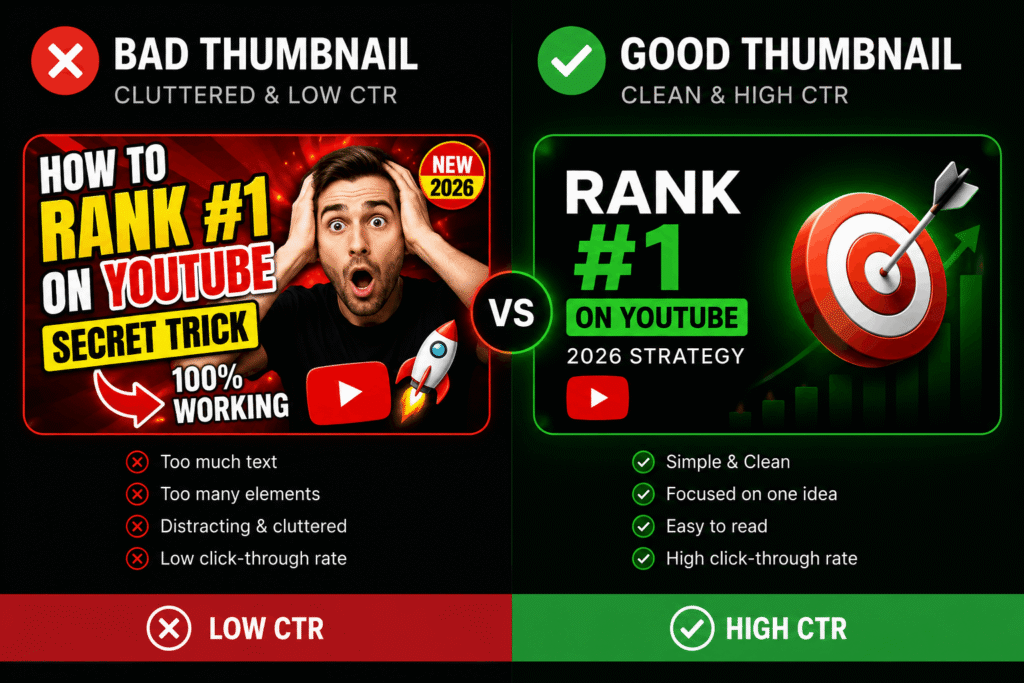
- Mobile-First Design: Over 80% of your views will come from mobile screens. Test your thumbnail at a 10% zoom level. Is the text still readable? Is the main subject clear? If not, redesign it.
5. Cracking the Audience Retention Code
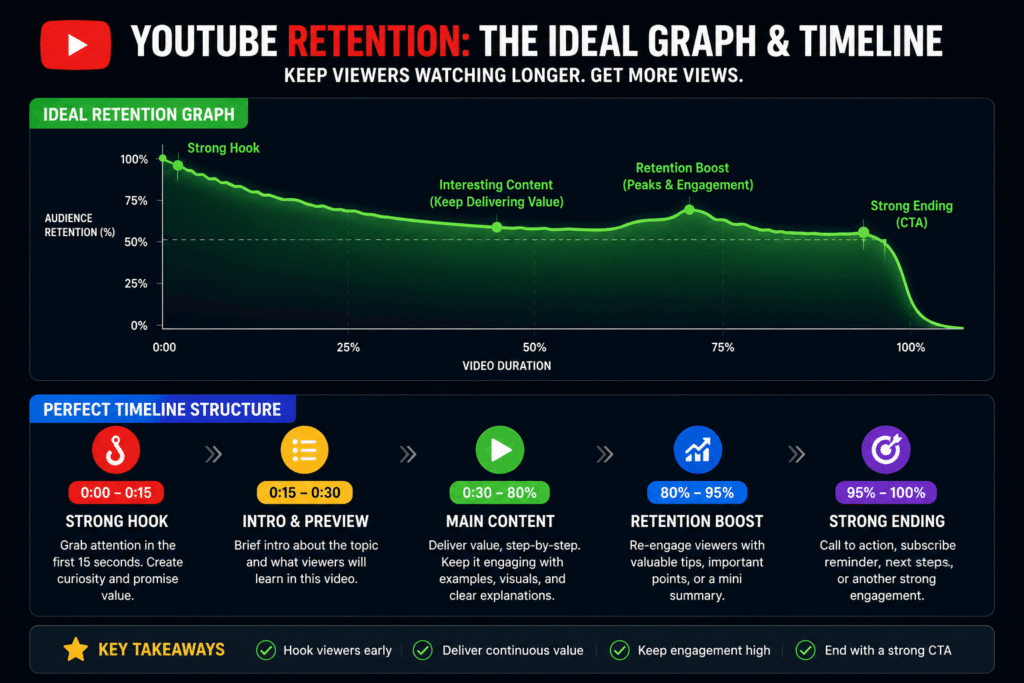
You got the click. Now, how do you keep them watching? Audience retention is the single most important ranking signal for the YouTube algorithm.
[0:00 - 0:30] -> The Instant Value Hook (No long intros)
[0:30 - 3:00] -> Establish Problem & Introduce Solution
[3:00 - End]  -> High-Paced Value Delivery + Dynamic Editing
The “No-Intro” Hook Strategy
Get rid of your 5-second animated channel intro with loud electronic music. Nobody cares about your logo; they care about their time. Start the video by instantly addressing the user’s problem. Within the first 10 seconds, promise them a specific payoff by the end of the video.
Visual Resets Every 5 Seconds
Human attention spans are shorter than ever. You must give the brain a new visual signal every 4 to 6 seconds to prevent them from clicking away. You can easily achieve this by using:
- B-Roll footage (Relevant overlay videos or screenshots)
- Zoom-ins and Zoom-outs (Slight scale changes on your face)
- Sound effects (SFX) like subtle whooshes or page flips
- On-screen text pop-ups highlighting key phrases
6. Leveraging Semantic SEO and Transcripts
YouTube does not just read your text metadata anymore—it listens to every single word you say. YouTube’s AI automatically transcribes your audio to understand what the video is truly about.
This means you need to practice Semantic SEO:
- Say your primary keyword naturally within the first 30 seconds of speaking.
- Speak clearly so the auto-captioning system maps your words accurately.
- Mention related secondary terms throughout the video. For example, if your video is about “Weight Loss,” make sure you say phrases like “healthy diet,” “calorie deficit,” and “workout routine.”
7. The Power of “Session Duration” and End Screens
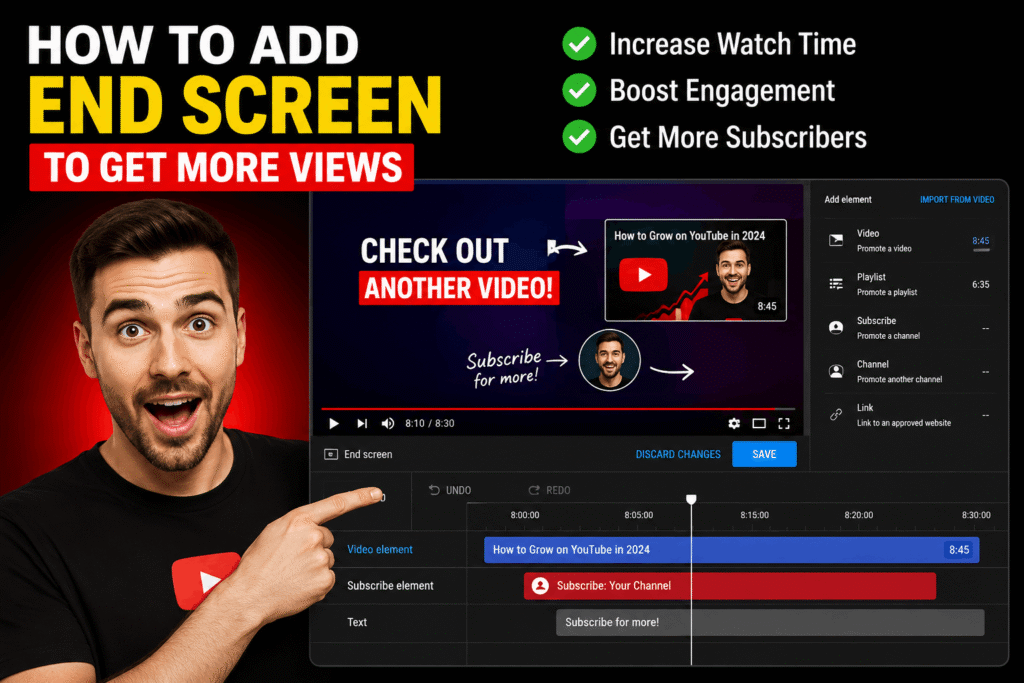
The algorithm looks at what a viewer does after they finish watching your video. If they watch your video, click on your end screen, and watch a second video on your channel, YouTube rewards your channel immensely because you increased their total Session Duration.
The Seamless End Screen Hack
Never say “Well guys, that’s the end of the video, thanks for watching!” The moment you say those words, the retention graph drops drastically because people swipe away.
Instead, use a seamless transition. Keep delivering value, and say: “Now that you know how to find the keywords, click on this video right here where I show you exactly how to write the perfect video script in under 10 minutes.” Point your hand toward the end screen widget. This keeps them in your viewing loop!
8. Summary Checklist: Your 2026 Upload Routine
To make things easy for you, here is your quick, step-by-step checklist to use every single time you prepare to publish a video:
| Phase | Task Required | Target Goal |
| Research | Find intent-focused, long-tail keywords | Low competition, high user intent |
| Production | Say key terms in the first 30 seconds; add visual resets | 50%+ retention rate at the 2-minute mark |
| Thumbnails | Use high-contrast, simple 3-element mobile-friendly designs | Maintain a CTR above 6% to 8% |
| Optimization | Write a mini-blog description with organized timestamps | Clean visibility on Google & YouTube Search |
| Post-Upload | Reply to every comment within the first 2 hours | Boost early engagement velocity |
Conclusion: Consistency Beats the Algorithm
Ranking YouTube videos in 2026 is no longer about trying to “trick” or “hack” a computer system. It is entirely about creating a premium user experience. Optimize your text metadata so the AI can categorize your video properly, but focus 90% of your energy on satisfying the viewer’s curiosity.
If you provide clean answers, use captivating and modern thumbnail designs, and hook your audience immediately without wasting their time, your videos will naturally climb to the top of the search charts. Pick your topic, apply this blueprint, and watch your analytics grow!
Learn more from YouTube Creator Academy:
Founder of YTVidSEO. Passionate about YouTube SEO, content strategy, and helping creators grow their channels through practical, easy-to-understand guides.
Frequently Asked Questions
Does YouTube still use tags in 2026?
Tags have very little impact. They mainly help with spelling variations and topic clarification.
What is the ideal YouTube CTR?
Most successful videos maintain between 5–10% CTR, although it varies by niche.
Can AI-generated videos rank?
Yes, if they provide genuine value, accurate information, and a good viewer experience.
Does watch time matter more than views?
Yes. Watch time, audience retention, and viewer satisfaction are generally stronger ranking signals than raw view count.